Understand the tooth form
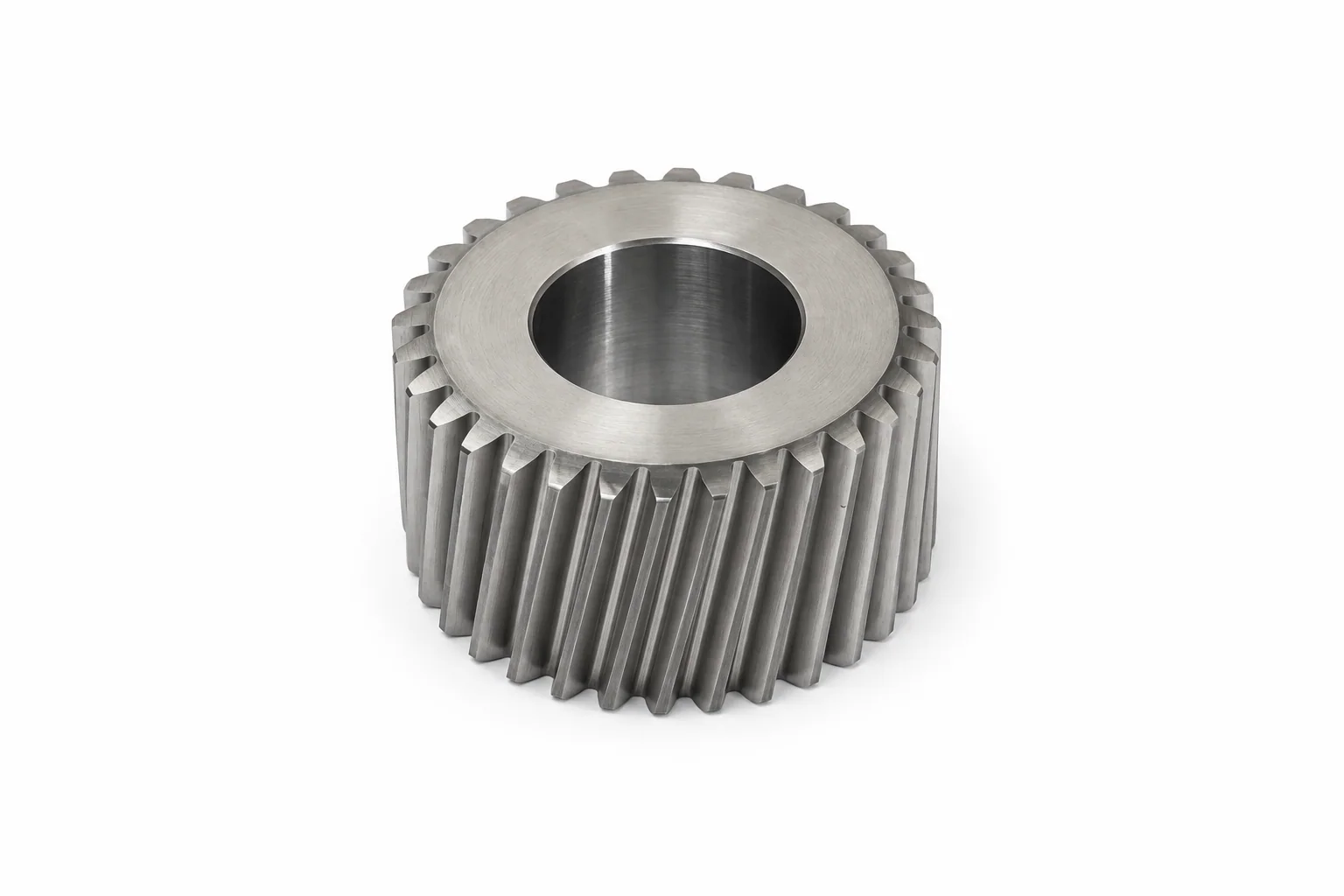
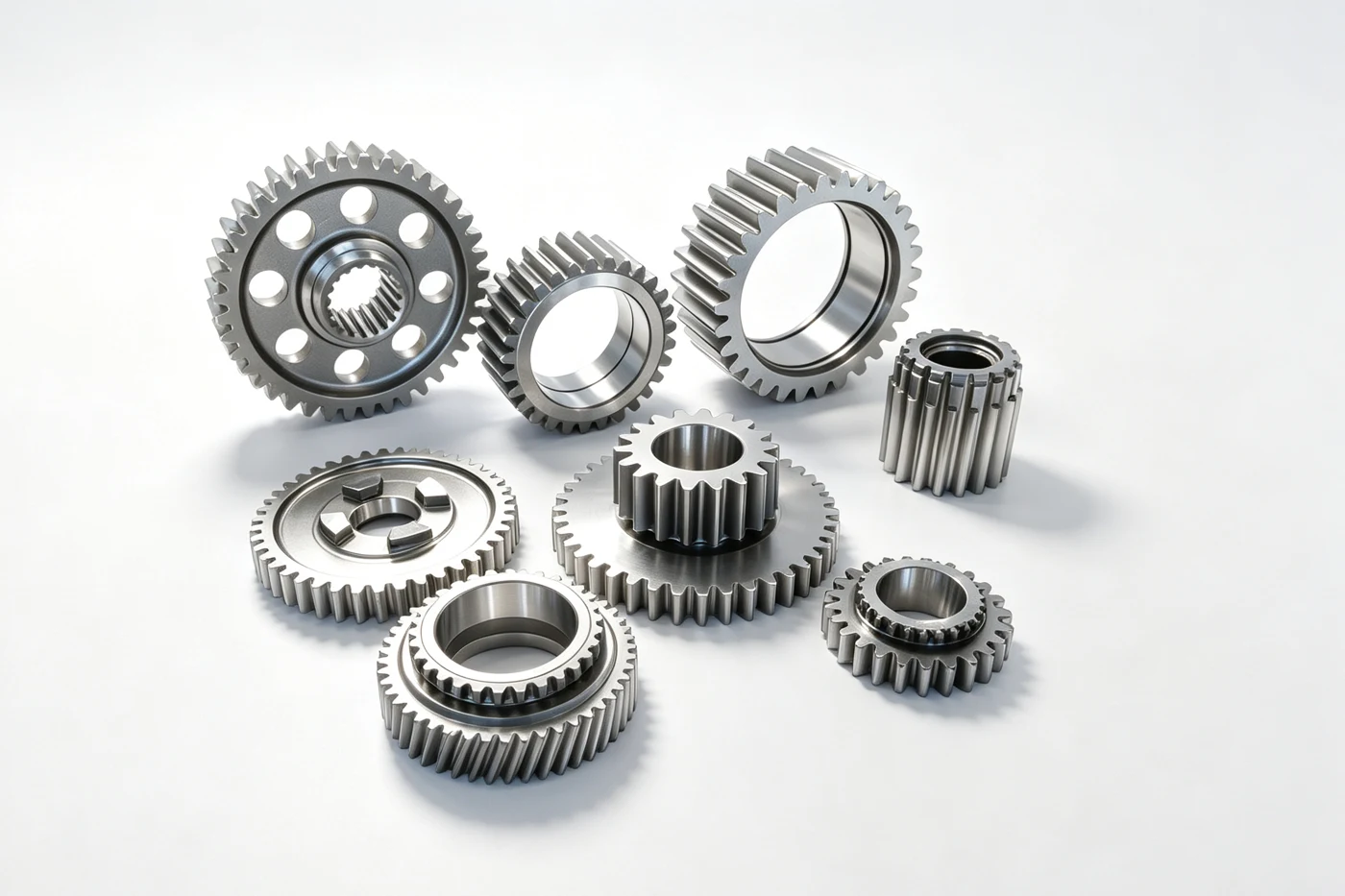
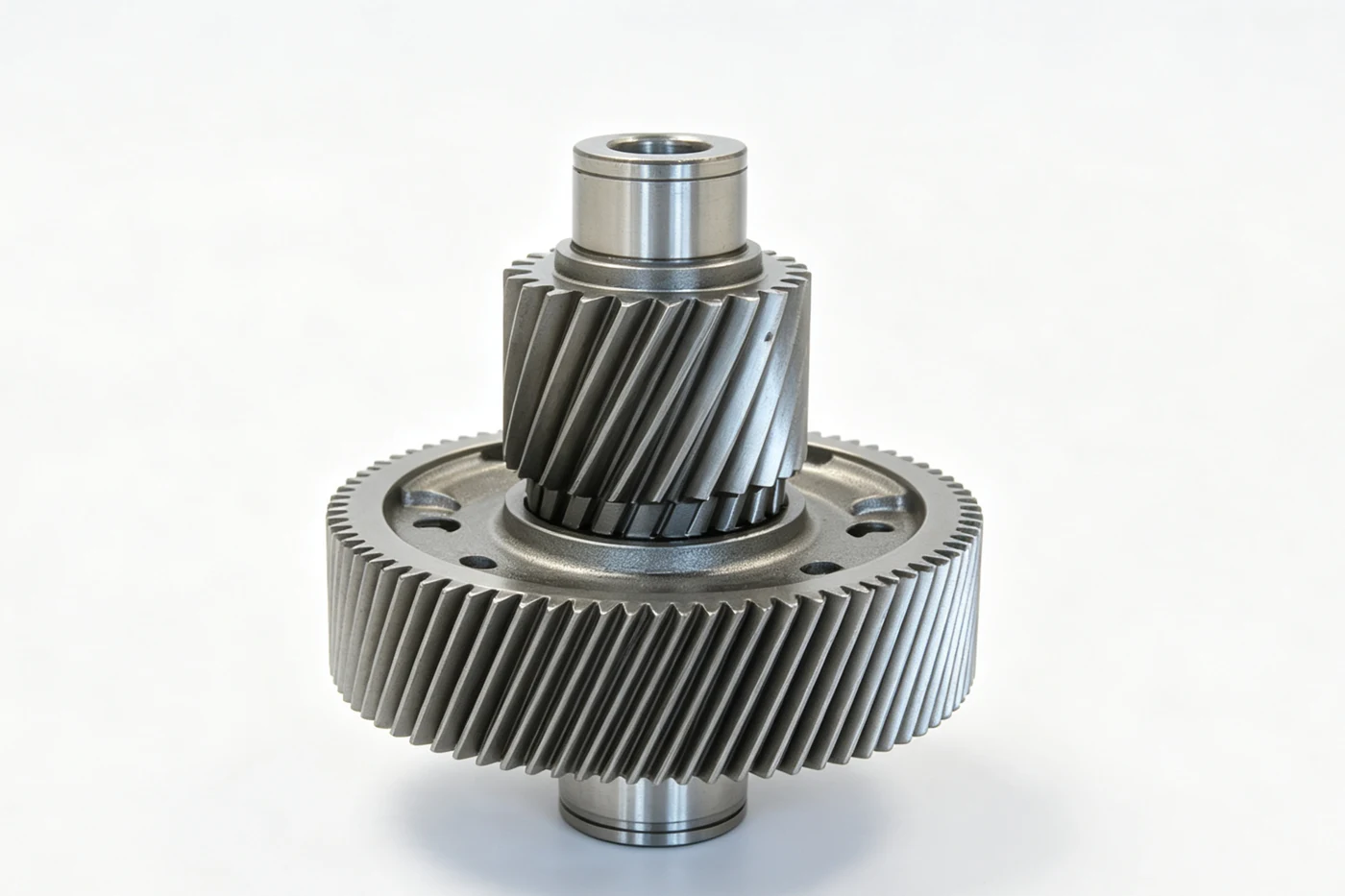
Spur gears have straight teeth parallel to the rotational axis. Helical gears have teeth set at an angle. In a conventional parallel-axis external helical pair, the mating gears use opposite hands. The helix also means the drawing must distinguish normal and transverse gear data.
Consider how the mesh enters contact
The angled tooth form of a helical gear develops contact progressively across the face. This is one reason helical gears are used where smooth running matters. A straight-cut gear may suit a system with different acoustic, operating or packaging priorities. Neither tooth form guarantees a particular noise level in a complete machine.
Account for shaft and bearing forces
A conventional helical mesh produces an axial force in addition to the other mesh forces. The designer needs to consider the bearing arrangement and the direction of thrust. A spur gear does not introduce that same helix-related axial component. This distinction affects the surrounding system, not only the gear blank.
Compare the actual drawing requirements
Both forms need tooth count, pitch or module, pressure angle, material and interface data. The helical drawing also needs helix angle and hand. For either form, specified tooth corrections, final accuracy and mounting datum relationships are more useful to a supplier than a broad description such as “high precision”.
Connect cutting, treatment and finishing
A component may be quoted with cut teeth or with a specified hard-finished condition. The approved requirement determines the route. Grinding, inspection and material condition should be compared consistently when evaluating quotations; two differently finished parts are not directly comparable simply because their tooth count matches.
Send the system context with the RFQ
Include the mating gear reference, stage location, speed range and relevant acoustic requirements. Keep component acceptance separate from assembly testing. The practical choice is the tooth form that suits the controlled design, bearing arrangement, operating environment and commercial project.
Quick review checklist
| Review item | What to define |
|---|---|
| Tooth form | Spur: straight teeth; helical: angled teeth |
| Additional drawing data | Helical: helix angle, hand and reference system |
| Axial force | Conventional helical mesh introduces axial thrust |
| Manufacturing comparison | Compare the same material and finishing condition |
| System review | Mating gears, bearing support, operating duty and noise requirements |
Further technical reading
KHK helical gear technical information
Relevant products and capabilities
Discuss your part requirements
Send the current drawing, quantity and application. Include the inspection records required for your project.
Send your drawing for a quote