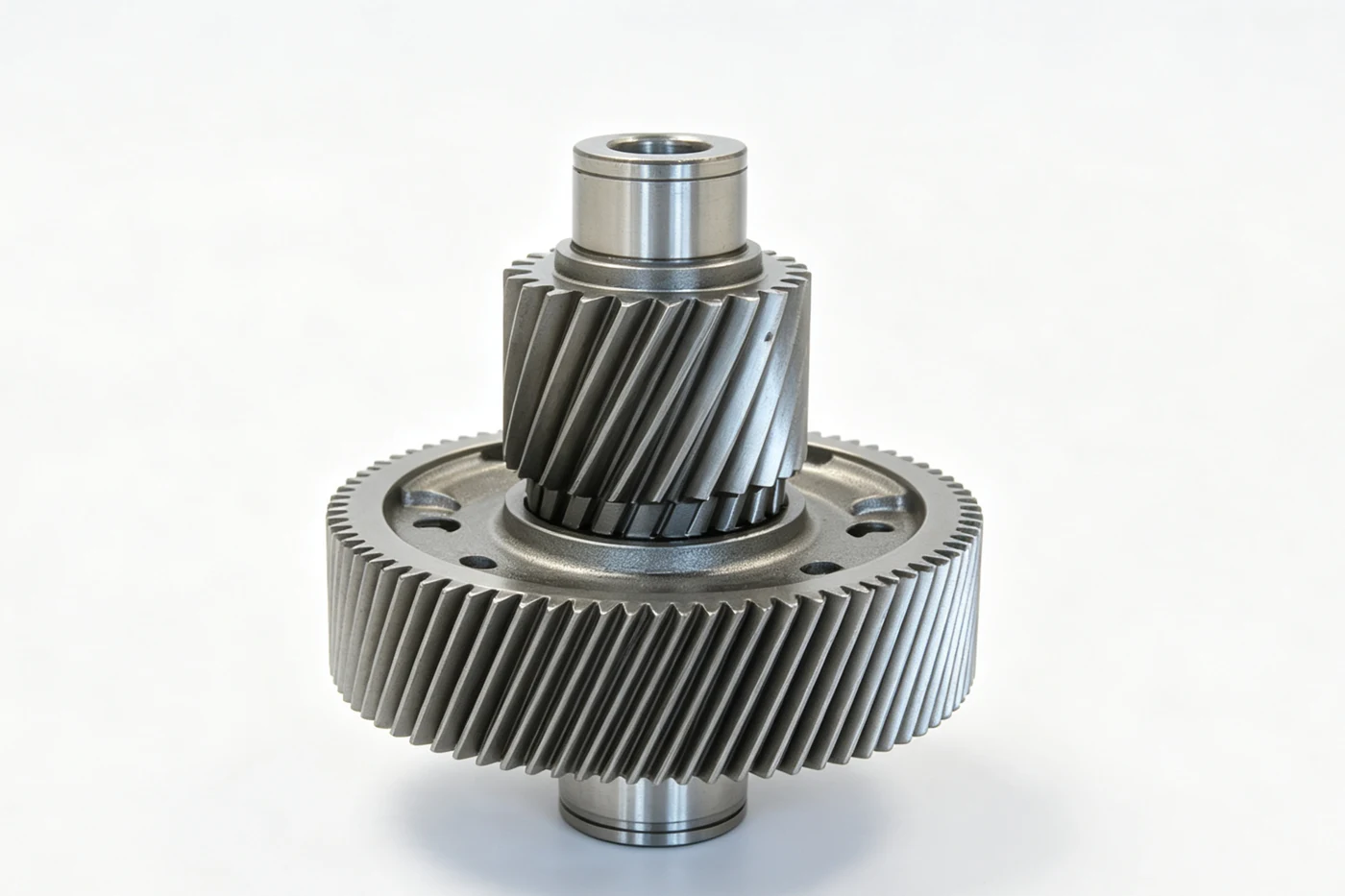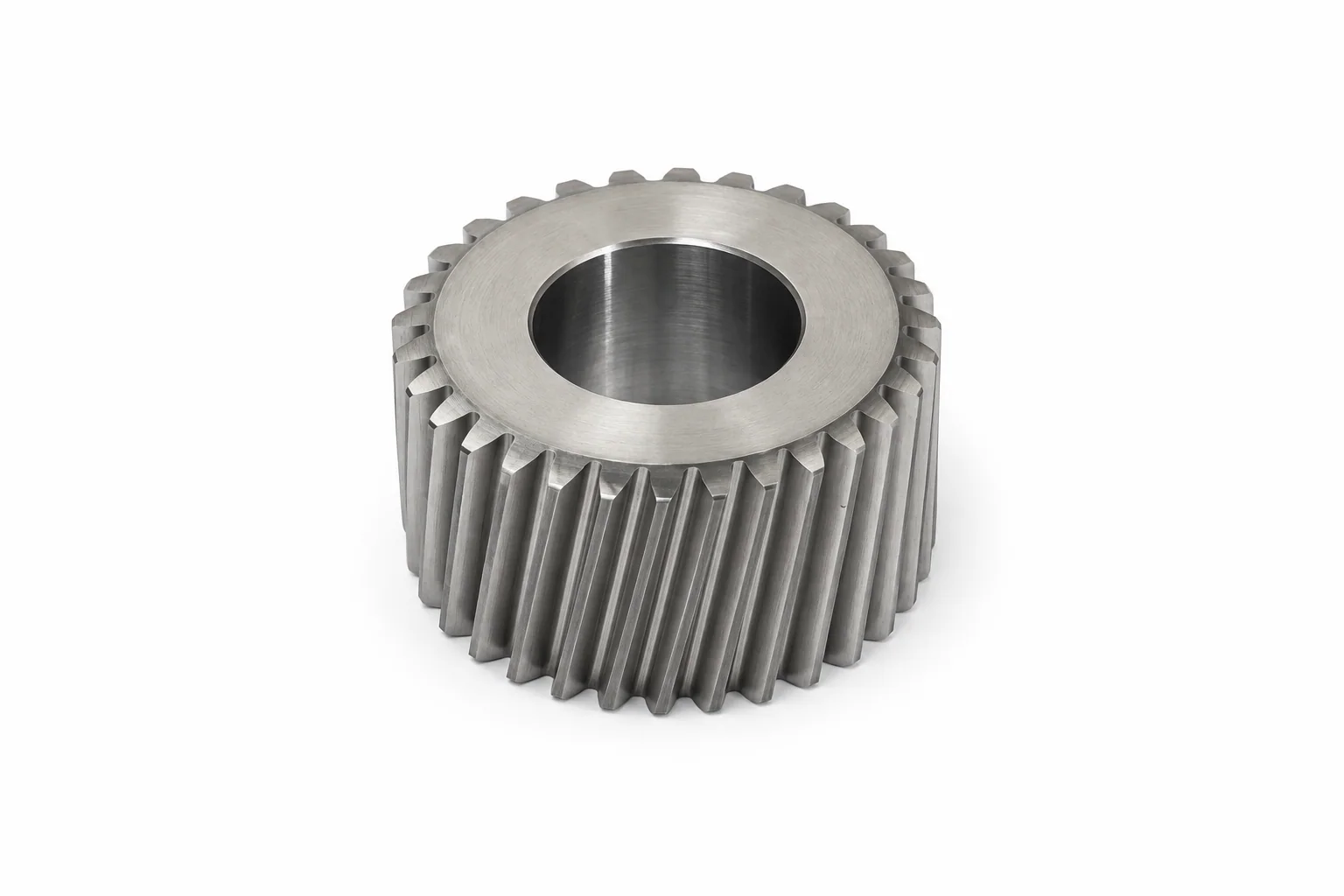
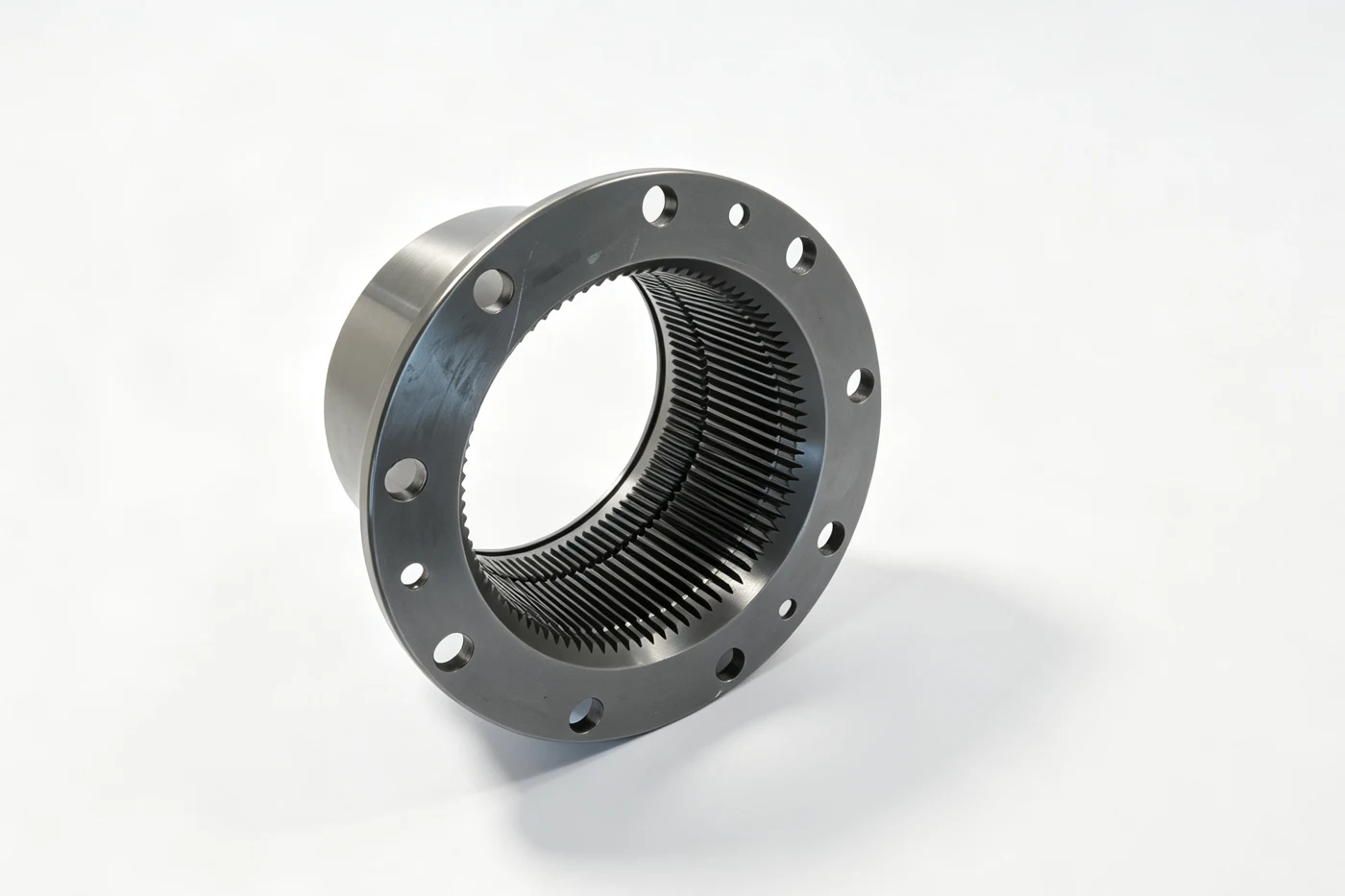
Locate the ring in the reduction stage
The ring surrounds the external planet gears. Its role depends on which member of the planetary stage is driven, fixed or used as the output. Identify the stage and assembly reference without assuming the supplier can reconstruct the complete system from one component drawing.
Provide the mating tooth definitions
Include the ring tooth count, module, pressure angle and spur or helical definition. Provide the planet and sun references when meshing compatibility is part of the review. A tooth count and outside diameter alone do not establish all the assembly relationships.
Define the mounting interface
A ring may be located by an outside diameter, flange, bolt pattern or another feature. Show the datum hierarchy and the relationship between the mounting surface and internal teeth. These features determine how the ring is held in the housing and inspected as a component.
Consider stiffness and processing movement
A thin ring can respond differently to clamping and treatment from a thick, flanged component. The route must consider the available wall geometry, the workholding scheme and any final finishing operation. Include the required final condition and dimensional limits rather than assuming that all ring forms share one process.
Clarify component versus assembly acceptance
The supplier can review the specified ring tooth and dimensional measurements. Whole-stage backlash, noise or torque performance also depends on the other parts and assembly conditions. If an assembly test is required, define the scope, mating parts and test conditions explicitly.
Organize a component-set inquiry
For several parts, use a bill of materials with quantities per assembly. Identify whether matched-set records, marking or pairing are required. A common assembly revision helps keep the tooth and mounting interfaces aligned when several component drawings are released together.
Quick review checklist
| Review item | What to define |
|---|---|
| Ring drawing | Internal teeth, material and final condition |
| Mating gears | Planet and sun identities and revisions |
| Mounting | Locating diameter, flange, bolt pattern and datums |
| Carrier | Planet-location reference where relevant |
| Acceptance boundary | Component measurements versus complete-stage tests |
Relevant products and capabilities
Discuss your part requirements
Send the current drawing, quantity and application. Include the inspection records required for your project.
Send your drawing for a quote